
The Essential Guide to Effective Time Management for School Principals
Time management is a critical skill for school principals, who juggle numerous responsibilities on a daily basis. From overseeing staff and students to managing budgets and implementing curriculum, their to-do lists can seem endless. However, by mastering time management techniques, principals can increase productivity, reduce stress, and ultimately enhance the overall functioning of their schools. In this blog, we’ll explore the importance of time management for school principals, drawing insights and providing specific strategies to help them optimize their time.
The Importance of Time Management for School Principals:
Effective time management is essential for school principals for several reasons:
Maximizing Productivity: With limited time available, principals must make the most of every minute to accomplish their goals efficiently.
Prioritizing Responsibilities: Time management enables principals to identify and focus on the most important tasks that contribute to the school’s success, such as student achievement and staff development.
Balancing Roles: Principals wear multiple hats, including instructional leader, administrator, and community liaison. Effective time management allows them to balance these roles effectively.
Stress Reduction: Poor time management can lead to stress and burnout. By managing their time effectively, principals can alleviate stress and maintain a healthy work-life balance.
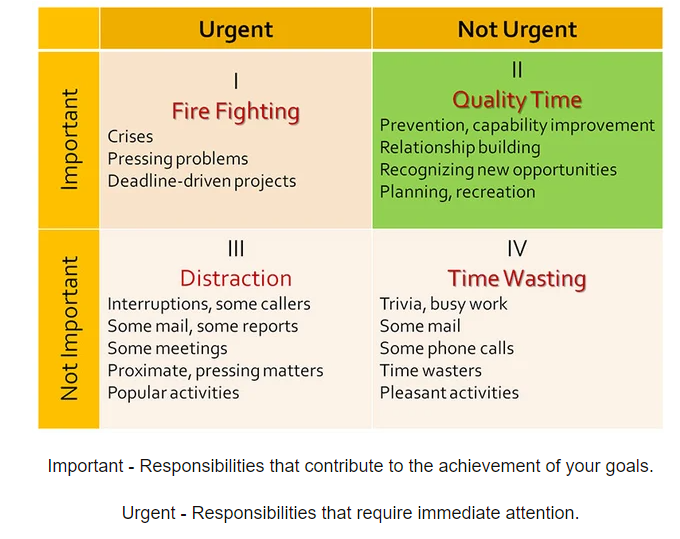
Stephen Covey, author of “The 7 Habits of Highly Effective People,” emphasizes the importance of prioritization and goal setting in time management. Covey’s Time Management Matrix categorizes tasks based on their urgency and importance, guiding school principals to focus on tasks that are both important and not urgent, such as strategic planning and relationship-building.
Other theorists, such as Peter Drucker and Brian Tracy, advocate for strategies like setting clear goals, delegating tasks, and minimizing distractions to improve time management.
Time Management Tips for School Principals:
Now, let’s delve into practical time management tips that school principals can implement:
Start with Goal Setting:
Clearly define short-term and long-term goals for your school. Break down larger goals into smaller, manageable tasks to ensure progress. Consider building SMART goals and using a plan, di study, act cycle to monitor your growth.
Prioritize Tasks:
Use Covey’s Time Management Matrix to categorize tasks based on their urgency and importance. Focus on Quadrant II activities, which are important but not urgent, to prevent firefighting and address issues proactively.
Create a Daily Schedule:
Allocate specific time blocks for different responsibilities, such as instructional leadership, meetings, and administrative tasks. Stick to your schedule as much as possible to maintain consistency and structure.
Delegate Effectively:
Trust your team and delegate tasks that others can handle. Empower staff members to take ownership of their roles, freeing up your time to focus on high-level priorities. The key here is making sure that you train your team how you want the tasks completed and then you monitor. Remember the old adage- trust but verify.
Minimize Distractions:
Identify common distractions in your work environment, such as emails, phone calls, or social media. Set boundaries and allocate dedicated time slots for responding to these distractions, while prioritizing uninterrupted focus on important tasks. Use your office team to support you in abiding by your schedule and helping you with the distractions.
Practice Self-Care:
Prioritize your well-being by scheduling regular breaks, exercise, and relaxation activities. Taking care of yourself physically and mentally is essential for maintaining productivity and resilience.
Time management is a fundamental skill for school principals, enabling them to maximize productivity, prioritize responsibilities, and reduce stress. By incorporating insights from theorists like Covey and implementing practical strategies, principals can optimize their time and lead their schools to success. Remember, effective time management isn’t just about managing time; it’s about managing priorities and achieving goals efficiently.
 The Growth Leadership Collective